


The first invoice issued is a small celebration for every entrepreneur – and at the same time a document with prescribed content. A wrong clause or a gap in the numbering is not the end of the world, but it is an unnecessary worry in the event of an inspection. This guide covers everything a correct small-taxpayer invoice must contain, and the pitfalls that are easiest to prevent at the start.
Mandatory elements of an invoice
- Sequential invoice number – a single, uninterrupted sequence (e.g. 2026-001, 2026-002 …).
- Date of issue and the date the service was performed or goods supplied, if they differ.
- Your details: name and surname or the sole proprietorship’s trading name, registered address and tax number.
- The buyer’s details: name and address; when dealing with companies, also their tax or ID number.
- Description of the service or goods: type, quantity and scope – precise enough to make clear what was performed.
- Price and total amount – for a small taxpayer without VAT, with the appropriate clause (below).
- Payment deadline and method: bank account (TRR), reference and payment currency (e.g. 15 days).

The clause for small taxpayers
Until you are registered for VAT, write on every invoice: “VAT is not charged pursuant to paragraph 1 of Article 94 of the ZDDV-1.” Without this clause the invoice is not complete. When (if) you become a VAT payer, the invoice content changes – you then charge VAT and state your ID number.
Numbering without gaps
The invoice sequence must be traceable: no skipped and no duplicated numbers. If you make a mistake, do not delete the invoice – issue a reversal or credit note and then a correct invoice. Keep all issued documents (generally for 10 years).
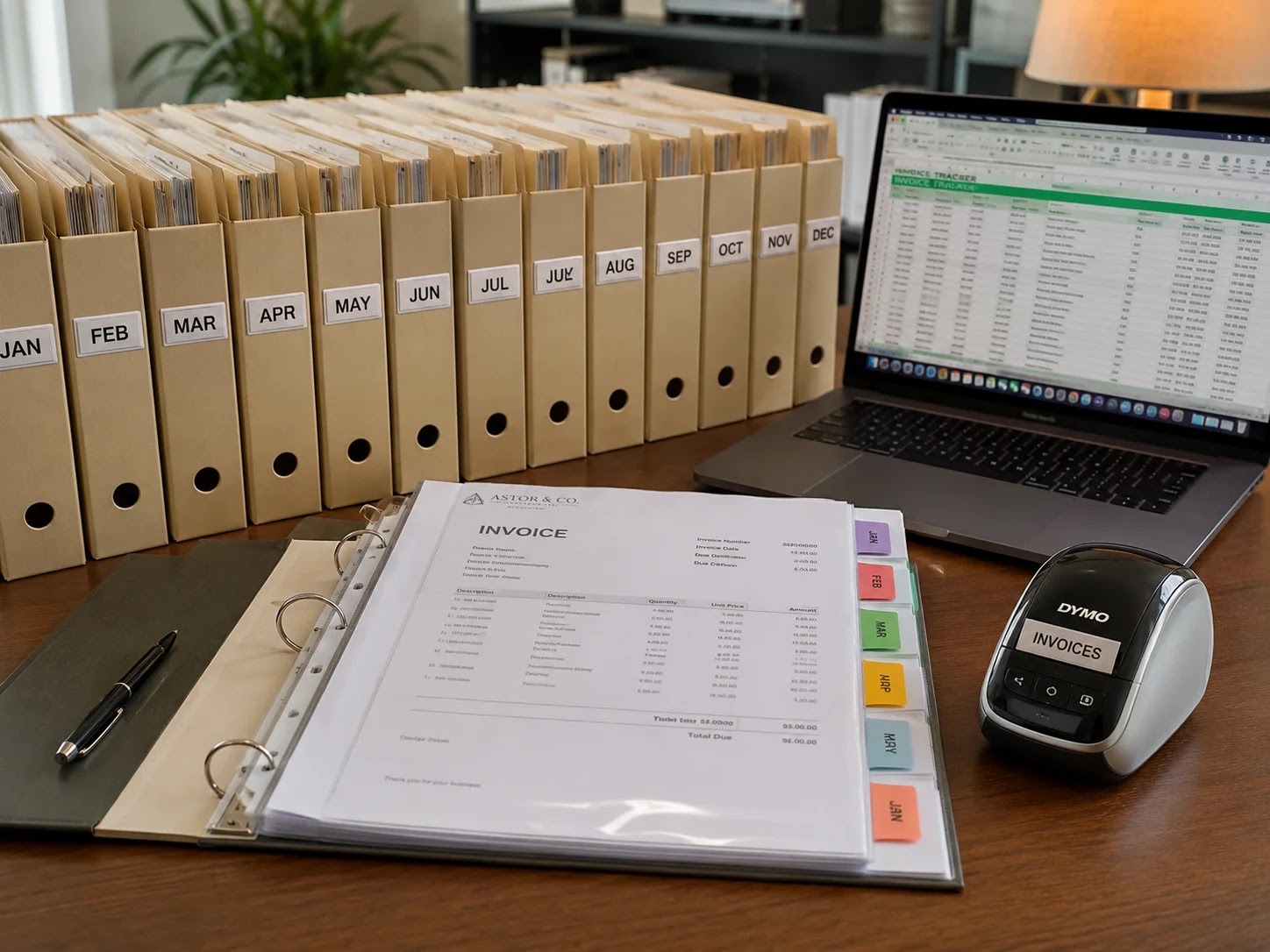
Cash: fiscal verification or a bound invoice book
If your clients pay in cash or by card, the rules on fiscal verification of invoices apply: you need a fiscal register (software connected to the FURS) or a bound invoice book, which you have verified with the FURS in advance. When operating exclusively via bank transfer (payments to the account), a fiscal register is not required.
Software or a template?
You can issue invoices from a template (Word/Excel), but dedicated software quickly pays off: automatic numbering, correct clauses, a record of turnover and reminders for late payers. For the public sector, an e-invoice via the UJP is mandatory – you arrange that only once you get such a client.

Admin in peace, not amid chaos
Issuing invoices, sending reminders and keeping records are the weekly routine of every sole proprietor. At makerSP_CE, members like to use a quiet end of the day for this – a printer, fast connection and coffee are included in the membership, and that half-hour of admin goes significantly faster in an organised environment than at the kitchen table.

Frequently asked questions
When do I have to issue an invoice?
At the latest when the supply or service is performed, but in practice as soon as possible after the work is done – the sooner it is issued, the sooner it is paid. For advance payments, you issue an invoice for the advance.
What do I do if I made a mistake on an invoice?
You do not correct or delete an issued invoice: issue a credit note (reversal) and then a new, correct invoice. That way the sequence stays complete and traceable.
Do I need special software to issue invoices?
It is not mandatory (except a fiscal register for cash), but it pays off: the software handles numbering, clauses and records, and reduces the chance of errors.
Conclusion
A correct invoice has all the mandatory elements, the right clause and its place in an organised record. Set up the template once, and every subsequent invoice becomes routine. If admin is stealing your focus, come and do it in the calm environment of makerSP_CE at Pivovarniška 6 – the printer and coffee are already waiting.
Reserve your spot at makerSP_CE
Coworking makerSP_CE, Pivovarniška ulica 6, Ljubljana (next to Tivoli Park). Fixed price, no notice period, 24/7 access and free parking.
Web: makerspace.si | Email: rezervacije@makerspace.si | Phone: +386 30 393 405
Related reading
- Tax-Deductible Expenses for a Sole Trader
- What Is Cash Flow
- Contributions for a Sole Proprietorship 2026
- When to Register for VAT: Threshold, Obligations and When It Pays Off