

Every freelancer sooner or later meets an invoice that stays unpaid on its due date. The first reaction is discomfort – “am I even allowed to send a reminder?” – but the right reaction is a calm, prepared procedure. When a client doesn’t pay, collection isn’t a conflict but part of the business: you did the work, payment is a contractual obligation, not a favour.

Step 1: a friendly nudge (a day or two after the due date)
Most delays aren’t malice but a misfiled invoice or an absent contact. A short, friendly message with the invoice attached solves a large share of cases: “Hello, according to our records invoice no. 2026-014, due on 30 June, hasn’t been settled yet – it was probably just overlooked, so I’m attaching it. Thank you for the transfer.” No apologising and no sarcasm.
Step 2: a formal reminder with a deadline
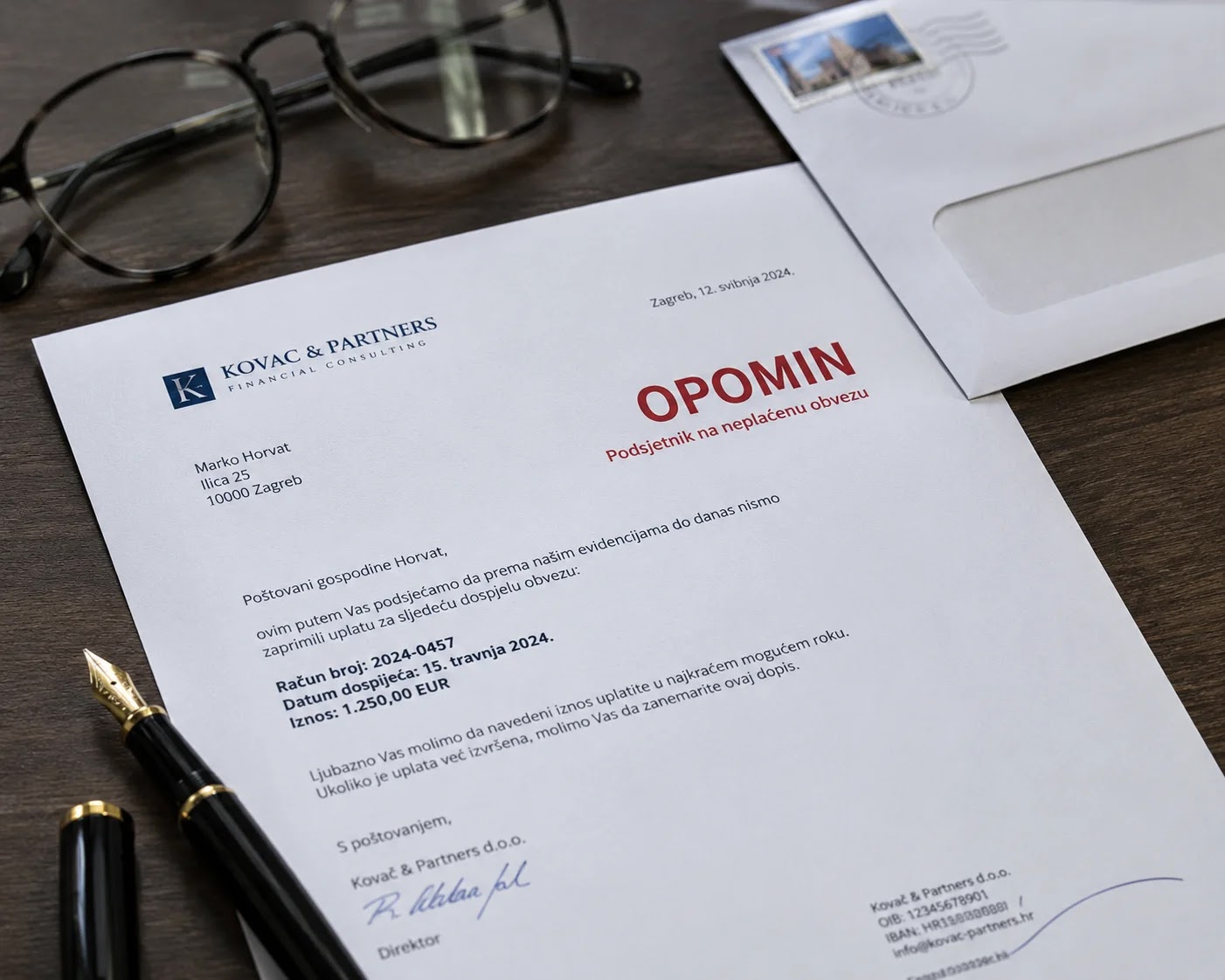
If there’s no response after a week or two, send a formal reminder: a reference to the invoice and contract, a concrete new deadline (e.g. 8 days), notice of statutory default interest and of the next steps in case of non-payment. Send it in writing (email is enough; recommended delivery for larger amounts) – this builds documentation for a possible enforcement. Polite, firm, no threats.
Step 3: a phone call
Written messages are easier to ignore than a voice. One calm call often moves what three reminders couldn’t: ask whether anything is wrong with the invoice and agree on a concrete payment date or an instalment plan. Confirm the agreement in writing straight away (“as agreed on the phone…”).
Step 4: default interest and withholding work
From the day of delay you are entitled to statutory default interest – for small amounts many don’t charge it, but even mentioning it is motivating. At the same time, healthy business hygiene applies: don’t do new work for a client who owes you. “We’ll continue once the open invoice is settled” is a legitimate and very effective sentence.

Step 5: e-enforcement on the basis of an authentic document
For undisputed monetary claims there is a fast track in Slovenia: a motion for enforcement based on an authentic document (the invoice is such a document), filed electronically via the eSodstvo portal. The procedure is standardised, the court fee relatively low, and a lawyer isn’t essential for typical cases. If the debtor doesn’t object, the enforcement order enables recovery (e.g. by seizing the account); if there is an objection, the matter continues as litigation – then weigh the amount, the evidence and the cost of continuing.
What if the debtor is in insolvency?
If bankruptcy or compulsory settlement has begun over the client, enforcement is no longer the right route – you must file the claim in the proceedings on time (deadlines are short and preclusive). You track the announcements on the AJPES website; for larger amounts it pays to consult a lawyer here.

Prevention: the cheapest collection is the one you never need
- Check the client in advance: publicly available data on account blocks and creditworthiness says a lot before you sign.
- A deposit from new clients: a 30–50% advance is a standard, not rudeness – someone who won’t pay anything up front often pays nothing afterwards either.
- Clear terms on the invoice and in the contract: payment deadline, default interest, retention of ownership or of copyright until payment. We gathered the elements of a good client contract in a separate guide, and correct invoicing in the article on how to issue an invoice.
- Milestones on larger projects: partial deliveries and partial invoices limit your exposure to one milestone, not the whole project.
Admin in a calm environment
Reminders, a log of open items and a weekly review of receivables are a routine best done with focus – members of the makerSP_CE coworking space like to take a quiet hour for it in a space where the printer and coffee are already included in the membership, and a call room is available for the awkward calls. Cash flow is too important to manage on the side.
Frequently asked questions
When should I send the first reminder?
A day or two after the due date – friendly and immediate. Waiting out of politeness only teaches the debtor that your deadlines aren’t really deadlines.
Will I lose the client if I chase them?
You won’t lose a paying client with orderly reminders – professionalism respects professionalism. A client who leaves because you ask for payment wasn’t a client but a cost.
Is enforcement worth it for small amounts?
An electronic motion based on an authentic document is cheap and simple enough that it often pays off even for a few hundred euros – a served order alone moves many toward paying. Do the maths coldly: the claim amount against the fee and your time.
Conclusion
Collection is a system, not a drama: an immediate friendly nudge, a formal reminder with a deadline, a call, withholding work and – when necessary – e-enforcement via eSodstvo. Prevention matters even more: vetted clients, advances and clear terms. Your work is done; make sure it gets paid too.
This article is informational and not legal advice – check the current court fees and procedure before filing, and consult a lawyer for larger claims.
Related reading
- The Client Contract: The Elements That Protect You
- How to Issue an Invoice: Mandatory Elements
- What Exactly Is Cash Flow and Why It Matters
Book your spot at makerSP_CE
makerSP_CE coworking, Pivovarniška ulica 6, Ljubljana (by Tivoli Park). Fixed price, no notice period, 24/7 access and free parking.
Web: makerspace.si | Email: rezervacije@makerspace.si | Phone: +386 30 393 405