

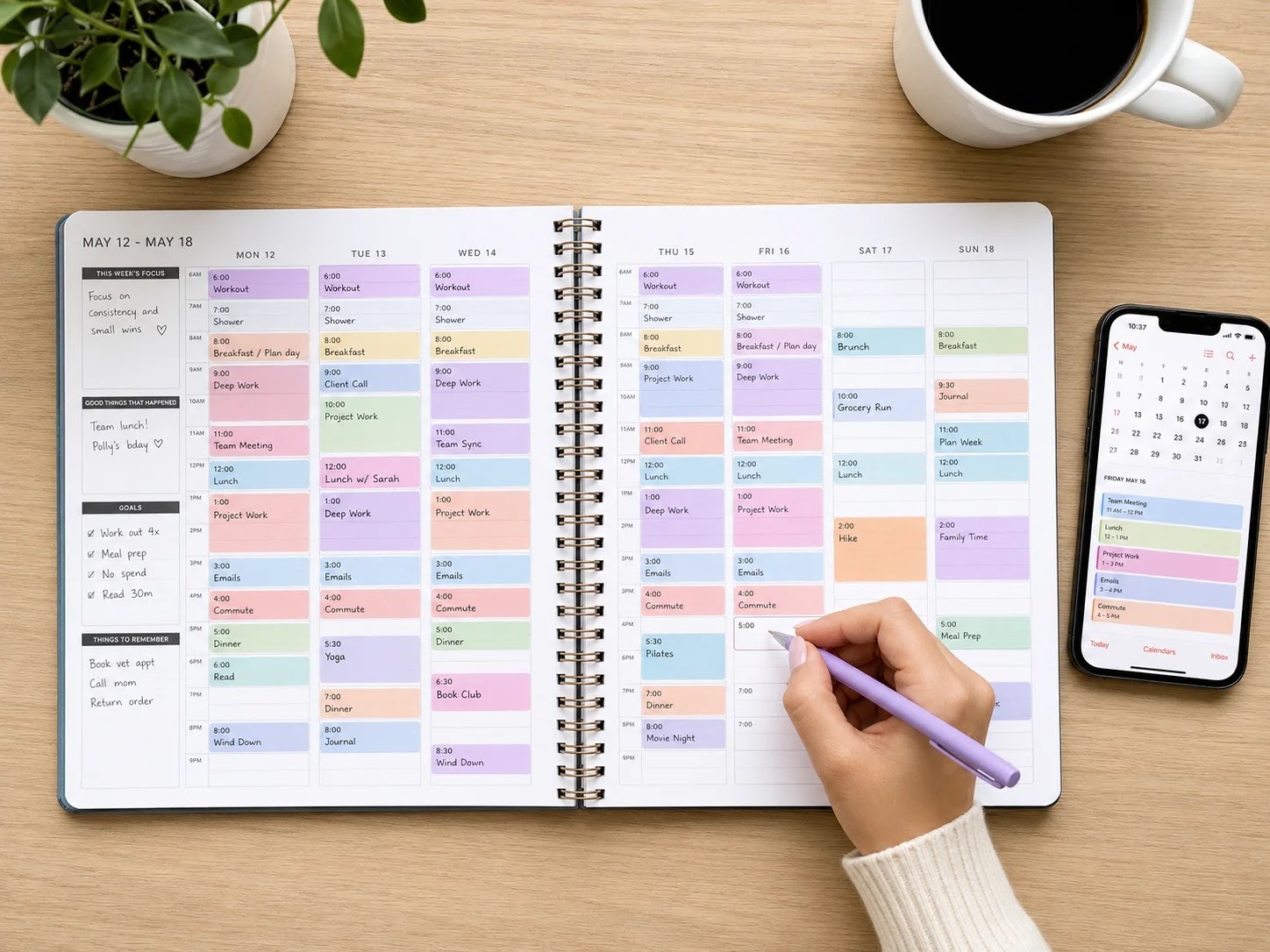
We all have the same 24 hours – the difference is who decides about them. If your day is run by email, messages and other people's „urgent“ requests, the evening leaves you with the feeling of a full but empty day. The six techniques below put the wheel back in your hands; pick one or two, not all at once.
Why a classic to-do list does not work
A list tells you what needs doing, but not when. That is why the hardest tasks slide from day to day, while the small stuff disappears first. Every technique below solves exactly this: it assigns tasks a time.
6 time management techniques
1. Time blocking: a calendar instead of a list
Enter every important task into your calendar as a meeting with yourself – with a start and end time. What is in the calendar happens; what is on the list waits.
2. MIT: the most important task of the day

Every morning (or the evening before) choose one task that must get done, even if everything else falls apart. Do it first, before email. One completed MIT a day means 20 important results a month.
3. Pomodoro: 25 minutes of work, 5 minutes of break

The ideal technique for tasks you avoid and for low-energy days. Four pomodoros in a row, then a longer break. The timer creates urgency; the breaks prevent attention burnout.
4. Batching: similar tasks together

Handle email, phone calls, invoicing and paperwork in groups at set hours, not as they come. Every switch between task types costs a few minutes of ramp-up – batching eliminates that loss.
5. The two-minute rule
Anything that takes less than two minutes, do the moment it appears – a reply, a confirmation, a quick booking. Anything longer goes into the calendar or onto the list. That way small stuff does not clutter your head or interrupt your blocks.
6. The weekly review: 30 minutes that save the week
Every Friday or Sunday, review: what got done, what carries over, what are the three goals of next week – and enter them into your calendar right away. Without a weekly review, every technique eventually falls apart.
Which technique for whom
| Technique | Best for | The point in one sentence |
|---|---|---|
| Time blocking | People with a full calendar and several projects | Assigns each task a concrete slot |
| MIT | Everyone – the easiest first step | One key task before everything else |
| Pomodoro | Procrastination and low energy | Short sprints with breaks |
| Batching | Lots of small tasks and messages | Similar things together, at set hours |
| 2-minute rule | A flood of small stuff | Micro-tasks now, the rest into the calendar |
| Weekly review | Long-term sustainability of the system | 30 minutes of planning for the whole week |
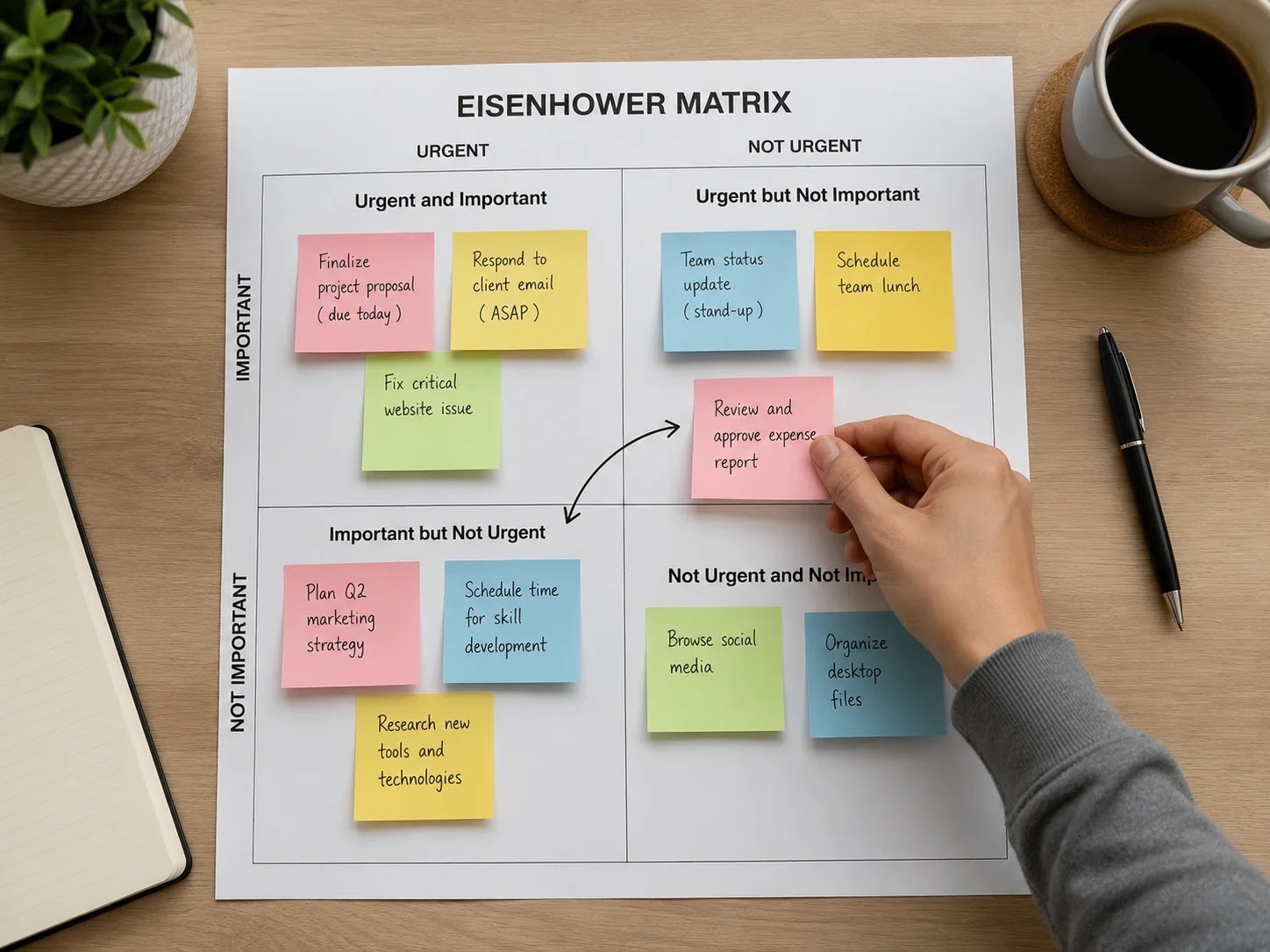
To sort tasks by importance (what even belongs in the calendar), use the methods from our article on prioritising tasks – the Eisenhower matrix and the 80/20 rule complement these techniques perfectly.
An environment where techniques hold up
Every technique works only as much as the environment supports it. At makerSP_CE you will complete your focus blocks without a vacuum cleaner next door and without a doorbell – the open space is quiet, calls happen in the call room, and coffee and everything else is included in the price. The structure of the coworking space supports the structure of your day.
Frequently asked questions
Which technique should I start with?
MIT. It takes a minute a day, and the result is visible that same week. Once it becomes a habit, add time blocking for your mornings.
What about unexpected things that break the plan?
Plan only 60–70% of the day, and leave the rest empty for the unexpected. A plan that bursts at the first call is not a bad technique – it is an overpacked calendar.
Do I need a special app?
No. The calendar you already have and a piece of paper are enough. Apps only help once the basic habit is in place – before that they are just another form of procrastination.
Conclusion
Time management is not filling the day, but deciding what the day deserves. Start with one technique, add a weekly review, and in a month you will barely recognise your calendar.
Related reading
Book your spot at makerSP_CE
Coworking makerSP_CE, Pivovarniška ulica 6, Ljubljana (next to Tivoli Park). Fixed price, no notice period, 24/7 access and free parking.
Web: makerspace.si | Email: rezervacije@makerspace.si | Phone: +386 30 393 405