

Good news first: connectivity is one thing you can stop worrying about in Slovenia. Fibre is widespread, mobile networks are fast and coverage blankets even mountain villages that don’t have a bakery. The only real questions for a visiting remote worker are which data setup to choose and where to plug in when a call really matters. Both answered below.
How good is the internet, honestly?
Very. Slovenian fixed connections routinely deliver speeds that make screen-sharing, cloud syncs and video calls a non-event, and 4G/5G mobile data is fast across the country. The weak links are the same as everywhere: crowded public hotspots and hotel networks shared with an entire floor of streamers. The infrastructure is excellent — the free Wi-Fi riding on it varies.
Mobile data: three visitor scenarios
- EU/EEA visitors: your home plan roams in Slovenia at domestic prices (“roam like at home”). For most stays, do nothing — it just works.
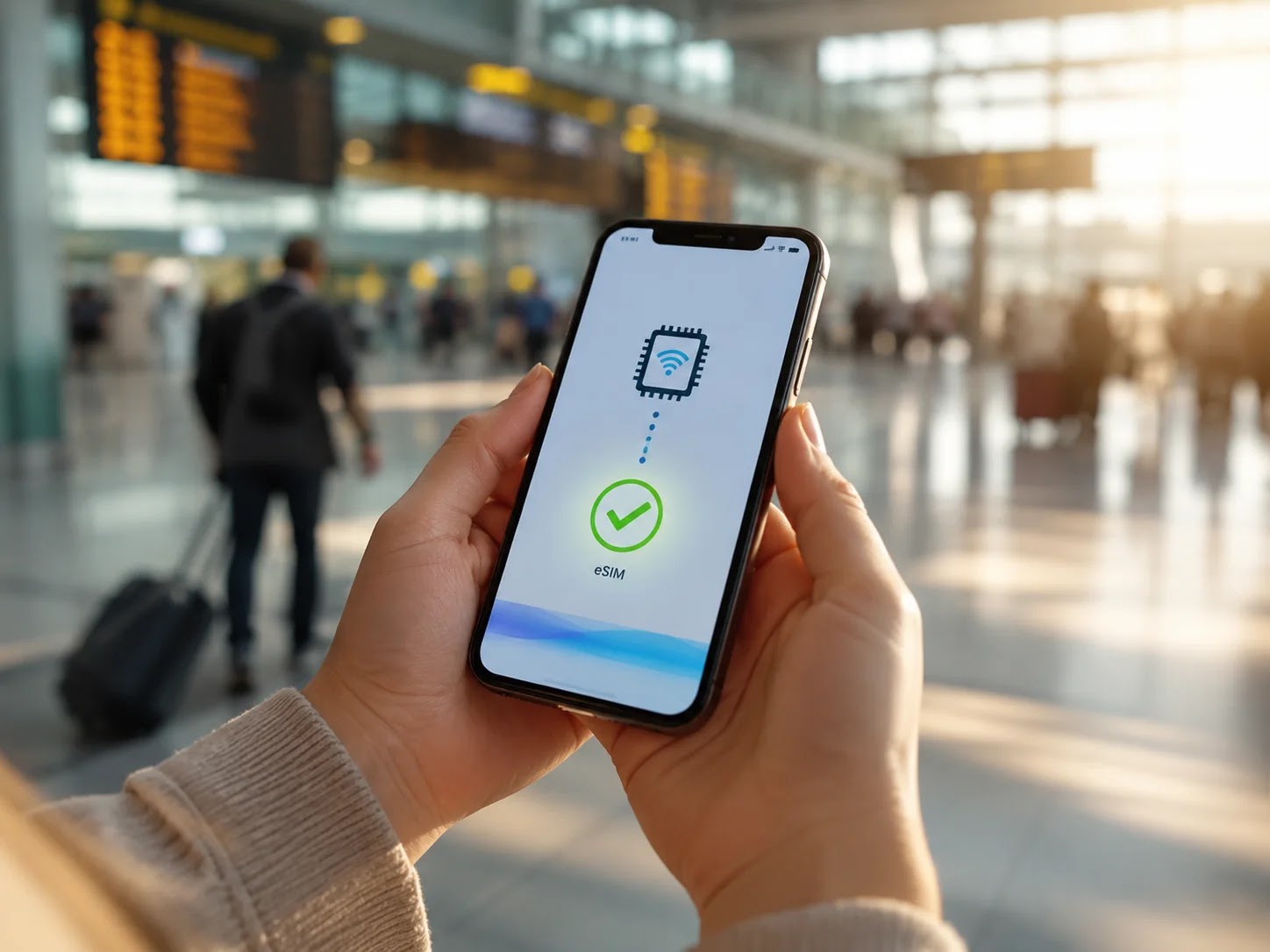
- Non-EU, short stay: a travel eSIM bought online before you land is the friction-free option — installed in minutes, no shop visit, data live when the plane door opens.
- Non-EU, longer stay / heavy data: a local prepaid SIM from one of the Slovenian operators gives the best price per gigabyte; kiosks, supermarkets and operator shops sell starter packs, and registration takes minutes with a passport.

Public Wi-Fi: use, but don’t depend
Cafés widely offer free Wi-Fi and Ljubljana has public hotspots around the centre — fine for maps and messages, gamble-grade for meetings. Standard traveller hygiene applies: avoid sensitive logins on open networks, prefer your own hotspot or a VPN, and never let a deadline depend on a café router named after the owner’s dog.

When the connection must not fail
Client call, product demo, contract deadline, big upload: that’s a dedicated-workspace day. At makerSP_CE the Wi-Fi is built for a room full of professionals doing exactly this — stable under video, generous under upload — with a call room so your audio is as clean as your bandwidth. Day pass 20 €; cheaper than the reputation cost of freezing mid-pitch.

The five-minute arrival checklist
- Data sorted (roaming confirmed / eSIM installed / SIM bought).
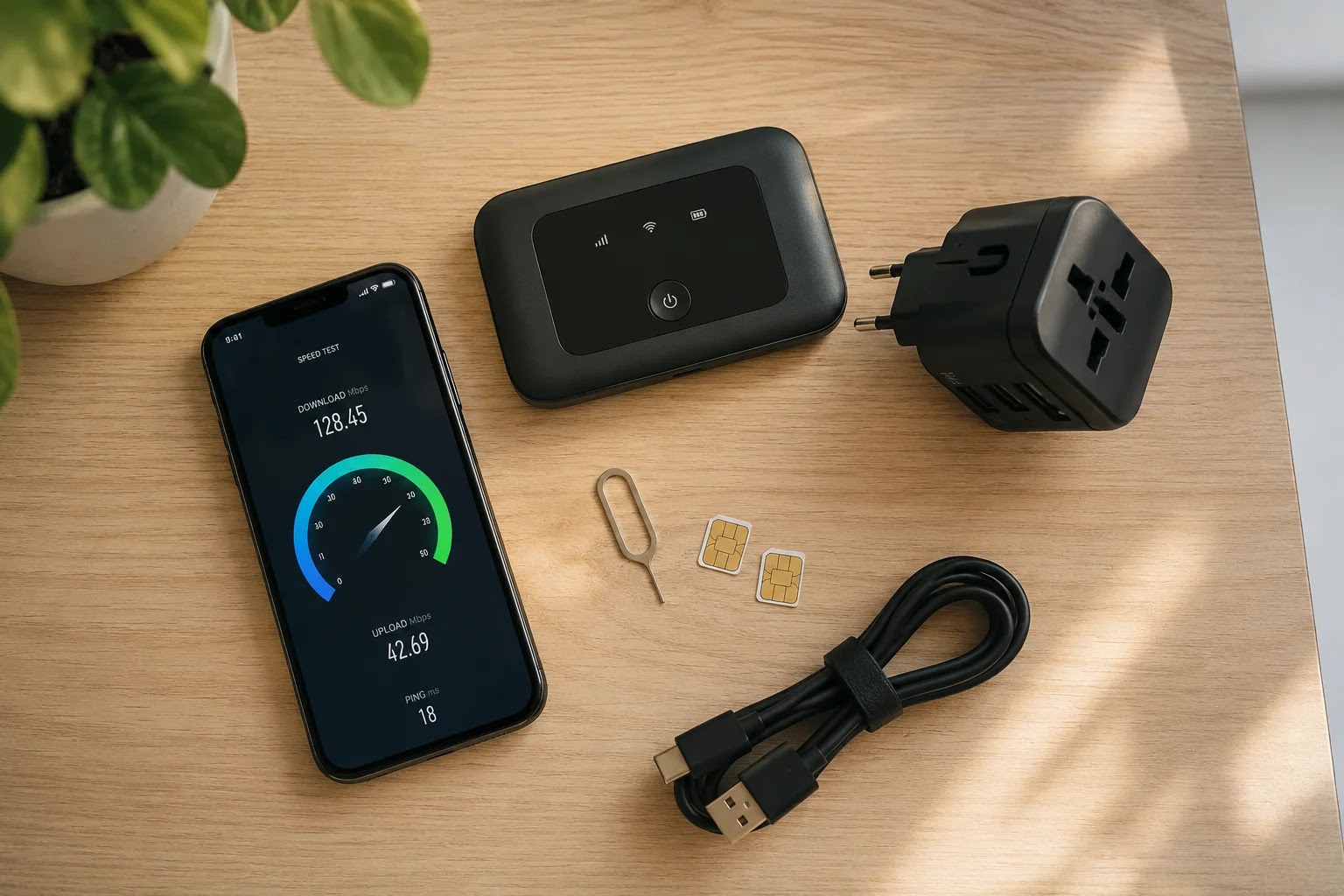
- Phone hotspot tested — your universal plan B.
- Offline maps of Ljubljana downloaded (habit, not necessity).
- Workspace booked for the days with calls — e-mail rezervacije@makerspace.si and it’s handled.
Frequently asked questions
Do I need a local SIM for a few days in Ljubljana?
EU visitors: no — roaming covers you. Non-EU visitors on short trips: a travel eSIM is usually the best effort-to-cost ratio; buy local prepaid only if you’re staying weeks or burning serious data.
Is hotel Wi-Fi in Ljubljana good enough for video calls?
Sometimes — which is exactly the problem. Evening congestion is real, and you find out live. For calls that matter, use a workspace connection or your own mobile hotspot as backup.
Is 5G available in Slovenia?
Yes, in Ljubljana and beyond, with 4G filling the rest solidly. For a visiting remote worker the practical takeaway is simpler: mobile data here is fast enough to be your safety net, not your bottleneck.
Final thoughts
Slovenia removes the classic nomad anxiety: the internet is simply good. Sort your data in five minutes, keep the hotspot habit, and give the high-stakes calls a desk with professional-grade Wi-Fi next to Tivoli Park. Connectivity handled — now go argue about which day trip to take.
Related reading
- Where to take video calls in Ljubljana
- Ljubljana Digital Nomad Guide
- Working across time zones from Ljubljana (CET)
Book your desk at makerSP_CE
makerSP_CE coworking, Pivovarniška ulica 6, Ljubljana — right next to Tivoli Park. Day pass 20 €, 24/7 access, free parking, meeting room and call room included.
Web: makerspace.si | E-mail: rezervacije@makerspace.si | Phone: +386 30 393 405