

Ljubljana runs on Central European Time (CET, UTC+1; CEST, UTC+2 in summer) — arguably the best time zone in the remote-work business. From here, a single working day can touch Tokyo’s afternoon, London’s whole day and California’s morning without anyone waking up at 3 a.m. Here’s how your Ljubljana day maps onto the world, and how to schedule it like a pro.
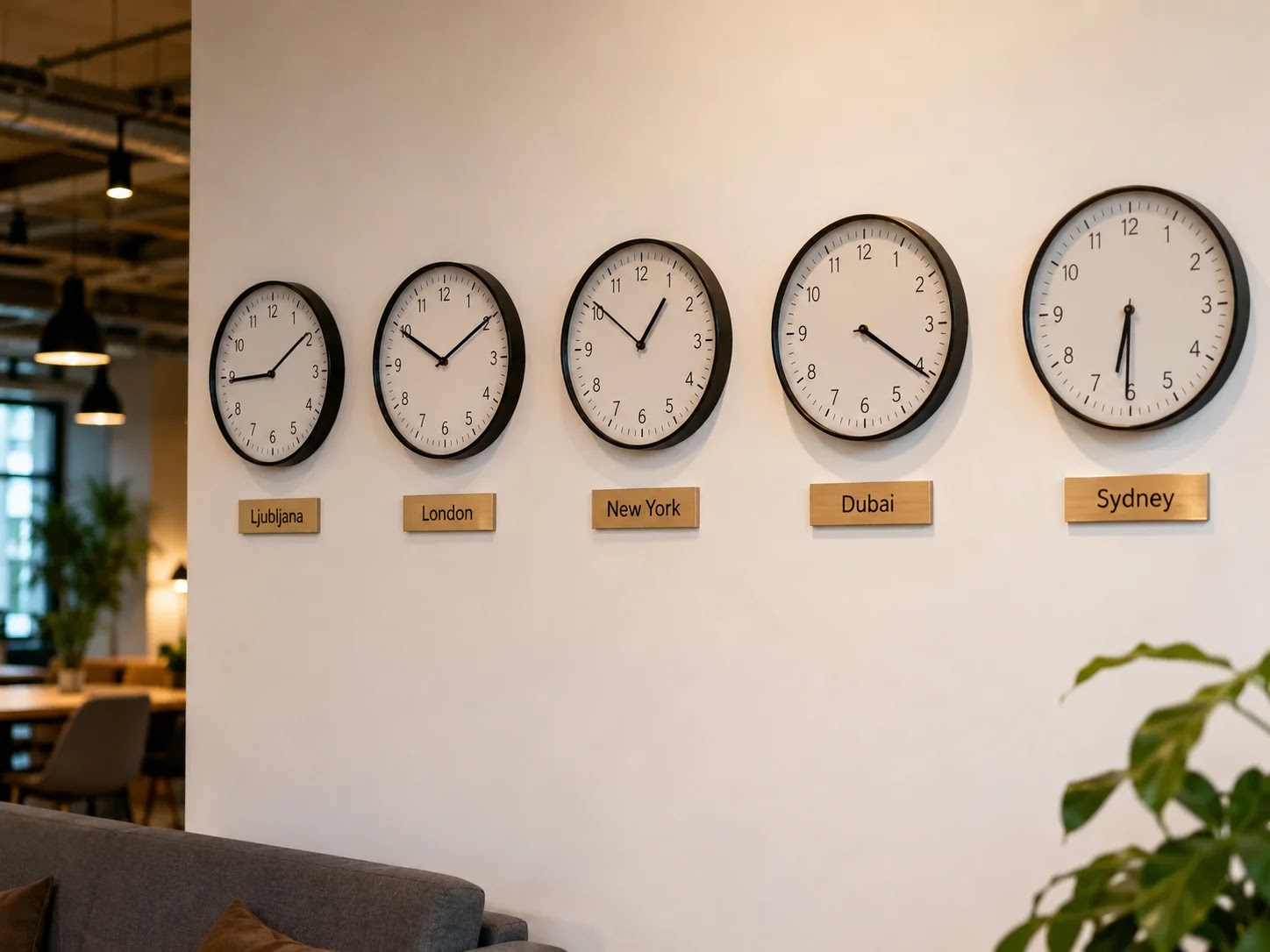
Your day against the world
| City | Offset from Ljubljana | Their 9 a.m. is your… |
|---|---|---|
| London | −1 h | 10:00 |
| New York | −6 h | 15:00 |
| San Francisco | −9 h | 18:00 |
| Dubai | +3 h (+2 in summer) | 06:00–07:00 |
| Singapore | +7 h (+6 in summer) | 02:00–03:00 |
| Sydney | +8 to +10 h | 23:00–01:00 (previous day) |
Offsets shift by an hour around daylight-saving changes on either side — always sanity-check meeting invites in late March and late October/early November.

The CET playbook by team location
- European team: trivial — you’re one of them. Full-day overlap, no tricks required.
- US East Coast: the classic split day: deep work in the morning while America sleeps, meetings from ~14:00–15:00 onward. You get focus and face time; they get someone who’s already solved things by their breakfast.
- US West Coast: overlap starts around 17:00–18:00 your time. Front-load your day, take a long Tivoli afternoon, return for evening calls — civilised, if you plan it.
- Asia–Pacific: flip it: early Ljubljana mornings catch their afternoons. Sunrise call, then the whole day is yours.

Where 24/7 access stops being a gimmick
Odd-hour overlap is exactly where hotel rooms and cafés fail — one is closed, the other is a bed. makerSP_CE offers 24/7 access, so a 21:30 San Francisco standup or a 06:30 Singapore sync happens at a real desk with real Wi-Fi and a call room, not whispered over a minibar. Ask about access when you book; night-owl and dawn-patrol visitors are a known species here.
Protect the gift: the CET deep-work morning
If your stakeholders are in the Americas, CET hands you a superpower: four to six meeting-free morning hours, every single day. Guard them. Do the hard thing before lunch, walk it off in Tivoli Park, then spend the afternoon being available. Most remote workers chase this schedule for years; in Ljubljana it’s just what the clock does.

Frequently asked questions
Is Ljubljana good for working with a US company?
Yes — East Coast especially: mornings free for deep work, afternoons overlapping their core hours. West Coast works too if you shift your day later and have somewhere sane to take evening calls.
What time zone is Slovenia in?
Central European Time: UTC+1 in winter, UTC+2 (CEST) from late March to late October — same clock as Berlin, Vienna, Paris and Rome.
How do I survive a week of late-night calls while travelling?
Anchor the rest of the day: consistent wake time, daylight and movement at lunch, no caffeine after mid-afternoon, and a proper desk for the calls themselves. A bad chair at 22:00 ages you in dog years.

Final thoughts
Time zones are the invisible infrastructure of remote work, and Ljubljana sits on prime real estate: mornings for Asia or focus, afternoons for the Americas, all-day Europe. Add a 24/7 desk next to a park and the “where should I work from” spreadsheet starts filling itself in.
Related reading
- Where to take video calls in Ljubljana
- Internet, SIM cards and Wi-Fi in Ljubljana
- Ljubljana Digital Nomad Guide
Book your desk at makerSP_CE
makerSP_CE coworking, Pivovarniška ulica 6, Ljubljana — right next to Tivoli Park. Day pass 20 €, 24/7 access, free parking, meeting room and call room included.
Web: makerspace.si | E-mail: rezervacije@makerspace.si | Phone: +386 30 393 405